Starting with Gold Prices in 1970
If you had bought gold at the LBMA AM fix and sold at the LBMA PM fix starting in 1970, you would find that by the end of 2018, your gold would be worth only USD 3.33, down from the original USD 35. On the flip side, had you done the opposite—selling at the AM fix and buying at the PM fix—you’d have nearly $13,000 worth of gold by the end of 2018.
Gold Prices in 2018: Daily Fix Information
In the over-the-counter Gold Bullion markets, "Gold fix prices" are averages determined by various trading institutions and brokerages. These prices, especially foreign exchange (Fx) prices, are often the most discussed figures in precious metals trading. The global forex gold markets operate nonstop from Sunday at 6:00 PM (Eastern Time) to Friday at 5:00 PM (Eastern Time).
SD Bullion doesn't guarantee the timeliness, reliability, or completeness of the price data provided and isn't liable for any losses resulting from inaccuracies. This information is meant solely for instructional purposes, and customers should not use it for speculative investments.
Evaluating the Precious Metals Market in 2018
Looking back, 2018 was forecasted to be neutral to slightly negative for gold, and that prediction proved accurate. After the December 2017 FOMC meeting, gold prices saw a sharp rise. Comparing the pre-meeting prices (around $1,260) to the average price in 2017 ($1257.12) confirms our "neutral to slightly bearish" outlook.
Gold Prices from December 2017 to December 2018
If we assess the 3% decline in gold prices in 2018, it's essential to understand that such a decline isn't unusual. While some might have hoped for a consistent rise in gold prices or a significant recovery to around $1,900, the reality was different. Compared to the stellar performance in 2011 and the over 10% increase in 2017, gold's performance in 2018 was lackluster.
Trends and Influences on Gold Prices from 2013 to 2018
The data from 2013 to 2018 shows that a 3% decline over the period isn't extraordinary. 2018 was challenging for precious metals due to the Federal Reserve raising interest rates four times, tightening the financial system. Meanwhile, the US economy grew robustly, and inflation remained low.
The Influence of the US Dollar and Real Interest Rates
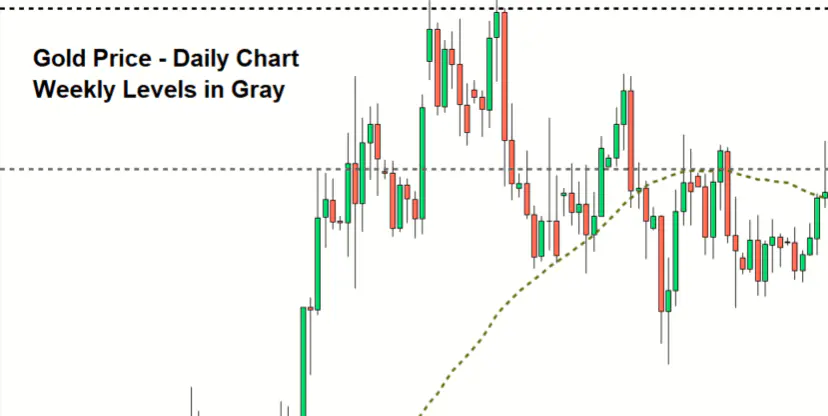
Gold prices are significantly influenced by the US dollar and real interest rates, as reflected in the charts. In 2018, the dollar index rose from 120 to 128 (6.66%), and 10-year Treasury note yields more than doubled from below 0.5% to well above 1.0%. The Fed's tightening cycle widened the policy gap between the US and other countries, leading to a stronger dollar and reduced gold appeal.
Capital Reallocation and Gold's Performance
The robust US economic expansion and rising interest rates prompted investors to shift their capital into dollar-denominated assets, reducing their gold investments. While 2018's macroeconomic conditions were adverse for gold, its performance was reasonable given the circumstances.
Conclusion
Gold prices have fluctuated significantly over the years, with 2018 being notably challenging due to macroeconomic factors. Understanding these trends and influences can help investors make more informed decisions about their gold investments.